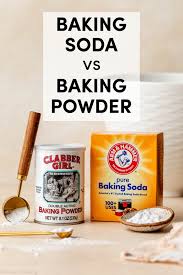
Differences between Baking Powder and Baking Soda
Baking soda is a single ingredient, sodium bicarbonate, that requires an acidic ingredient and moisture to activate and leaven baked goods. Baking powder, on the other hand, is a pre-packaged mixture of baking soda, an acid, and a starch (like cornstarch). Baking powder is designed to react with moisture and heat, making it a complete leavening agent.
Here’s a more detailed comparison:
Baking Soda:
- What it is: Pure sodium bicarbonate (NaHCO3).
- How it works: Reacts with an acidic ingredient (like buttermilk, molasses, or chocolate) and moisture to produce carbon dioxide gas, which leavens baked goods.
- When to use it: Recipes that already have an acidic ingredient.
- Example: Cookies, cakes, and muffins that use buttermilk or brown sugar as ingredients.
Baking Powder:
- What it is:A mixture of baking soda, an acid (like cream of tartar), and a starch (like cornstarch).
- How it works:Releases carbon dioxide when mixed with moisture and heat, making it a complete leavening agent.
- When to use it:When a recipe doesn’t include an acidic ingredient.
- Example:Many recipes where you don’t have an acidic ingredient, such as some cakes and muffins.
Key Differences:
- Acid:Baking soda needs an acid to activate, while baking powder already has the acid in its formulation.
- Moisture & Heat:Baking soda requires both an acid and moisture, while baking powder needs moisture and heat to activate.
- Completeness:Baking powder is a complete leavening agent, while baking soda needs an acidic ingredient to be added.
In essence: Baking soda is a single ingredient that needs an acid to work, while baking powder is a combination of ingredients that is ready to work with moisture and heat.